|
|
Archive for the 'Government' Category
November 5th, 2014 by Neil Killion
The 2014 elections were a resounding victory for the GOP. The Republicans picked up seven seats and the majority in the Senate, 13 seats and the largest majority in the House in over 80 years, and three governorships. I congratulate the Republicans on their victory, and look forward to the future.
Unfortunately Oregon was not as lucky. The Democrats gained a seat in the house and everyone else managed to keep their jobs. This leaves me scratching my head and wondering what the f***? Oregon has been on a downward slope for a while, yet the people responsible for that are re-elected over and over again. Oregon has high than the national average unemployment rates for 18 years, and Oregon has the second lowest high school graduation rate in the country at 69% with little hope in sight. Oregon keeps electing the same people over and over and not surprisingly is getting the same results.
The insanity needs to stop, and the answer can be found on our campus and other campuses in Oregon. It is time for the GOP to take stock of the future leaders in groups like the College Republicans and using those resources. We need to recruit these students and support them. Make sure they have the tools needed and the support of the party so that they can succeed.
In West Virginia, the youngest state lawmaker was elected yesterday. Saira Blair an 18 year old college freshman beat her Democrat opponent 63 to 30. Saira is proof that it can be done. It takes hard work, but it is possible.
Conservatives need to push against the idiocy of our current system and start putting in the effort now to be able to get members elected. Make sure young conservatives are getting the training needed to succeed.
Groups like the College Democrats and OSPIRG are well funded and make sure their people are trained in activism and getting their message out. We can do the same. We can make sure other conservatives and liberty minded students know they are not alone. We need to support each other. We need to come together to build each other up and be ready to fight the battles that will come in the future.
I recommend all conservatives start using sites like leadershipinstitute.org and other conservative groups that can provide the tools and training to defeat the Democrats.
Congratulations on the victory, but let’s start now and get ready for 2016. We have the time to get campaigns in place. Who can stand up for our values and offer a new path for Oregon? Remember conservative principles of limited government, personal freedom, and fiscal responsibility work.
Posted in Campus, Elections, Fiscal Responsibility, Government, Northwest, Oregon, Politics | Comments Off on Oregon Needs a GOP Victory
October 30th, 2014 by Neil Killion
Those of you who know me know I am a political junkie. I need my daily fix of news and politics or I end up shaking and babbling in the corner somewhere going through painful withdrawals. Usually this comes in the form of watching CSPAN and visiting a wide variety of news and political sites on the internet. Once in a while, however, I get a treat and Tuesday was one of those times.
I was invited to a meet and greet with Dr. Art Robinson, Republican candidate for Oregon 4th district running against Representative Peter DeFazio. I figured I was in for an hour of listening to someone campaign and my presence would be acknowledged, but that would be about it. Instead what I got was an hour sitting right next to Dr. Robinson engaged in conversation about issues what he thought, what I thought, and very little about his opponent. In fact I do not think Dr. Robinson actually mentioned his opponent during our conversation.
For someone in the final stretches of a campaign this was a delightful surprise. In today’s world of constant mudslinging and partisan bickering I expected to at least hear some trash talk of the opponent, but no none. Dr. Robinson was more interested in what I had to say about issues and where he stood on those issues.
Another thing that kind of surprised me was he did not follow up everything with an answer. Dr. Robinson was genuinely interested in what I had to say. Usually when you talk to politicians during campaign season you get a lot of “I hear you, and this is what I will do to fix it.” It probably helps that Dr. Robinson is not a politician, but instead is a scientist and researcher.
I will also point out that at no time during our conversation did I mention I was a writer, or that I wrote for the OC. He had no reason to think I was nothing more than a college student that was taking the time to come meet him before heading home to my wife and kids.
I was impressed with Dr. Robinson before I met him and I am glad to say he did nothing to change those opinions. If you have a chance to meet him I hope people will take the opportunity to do so. Talk to him, listen to what he has to say, do your own research, and then make your decision Tuesday.
Posted in Elections, Eugene, Government, Oregon, Politics | Comments Off on A Sit Down With Dr. Art Robinson
September 2nd, 2013 by Neil Killion
The United States’ response to the use of chemical weapons in Syria comes down to a question of deterrence and not necessarily the chemical weapon use. If the United States does not respond then deterrence will take a hit and this could result in serious set-backs to global security.
The United States is in this unpleasant situation because the administration claimed the use of chemical weapons is a red line that would be met with punishment. That red line has now been crossed between nine and fourteen times according to reports and if there is no response our ability to provide credible deterrence will suffer more than it has already.
The United States did not have a credible deterrent against the Assad regime to begin with for a couple reasons. First, the United States does not have a history of retaliating against the use of chemical weapons. Chemical weapons were used in the Iran-Iraq war with no repercussions. They were used by Saddam Hussein against Kurds in northern Iraq; once again with no retaliation. As previously noted, it has been used several times during the Syrian civil war with little response.
Second, Assad is no fool. He knows that after spending over a decade fighting two wars and helping rebels in Libya that the United States is war weary. The people of this nation are tired of being the world’s police. They are tired of having their sons and daughters coming back from far off lands missing limbs or in coffins. This does not make people gung-ho about getting involved in a civil war.
However, President Obama drew a red line at the use of chemical weapons and now we must act. Otherwise other red lines will mean little to our enemies. In the future our presidents should refrain from drawing red lines except for extreme circumstances such as an attack against the United States or its allies and the use of nuclear weapon; not the use of chemical weapons in a civil war. Neither Assad nor the rebels are allies of the United States, and the claim that chemical weapons kill indiscriminately does not hold water either. To push for military intervention over the use of chemical weapons is to suggest that a cruise missile or a drone do not kill innocent civilians.
It would be a better use of resources to provide aid to the nations that have been over-run by refugees fleeing the civil war.
Posted in Government, Middle East, Politics, World | Comments Off on The Syrian Mess
July 30th, 2013 by Neil Killion
Nanny Bloomberg’s “soda ban” was struck down by a New York Supreme Court of Appeals today. The ban prevented restaurants and street vendors from selling sugary drinks like soda, tea, and energy drinks in containers or cups larger than 16 ounces. This is supposedly an attempt to fight the obesity epidemic. Yet, the ban did not restrict coffee drinks blended with milk or milk shakes.
Bloomberg has pointed out that 2,000 people have died of diabetes since the ban was first struck down and promises an appeal. This is typical government knowing what is good for you and passing regulations that in the end will have little if any effect on the supposed problem. Pointing out that 2,000 have died suggests that had the ban been allowed to take effect it could have been prevented.
Obesity is a problem, but you cannot regulate it away. Only those of us falling into the obese category can fix it. Forcing someone to buy more than one drink is not going to do it. Obesity is a problem, but not a disease. You do not catch the obese germ or virus. You become obese because you decide to take in more calories than you burn.
This is the same city that blocks people from donating to food shelters because they cannot monitor the salt content. I am sure the homeless and those unable to provide for themselves care whether or not the food has a high salt level if the choice is that or going hungry.
There are better ways to solve problems and the government is not usually it. As this example once again shows.
Posted in Government, Law, Nanny Government, National | 1 Comment »
July 25th, 2013 by Neil Killion
A Neighborhood Watch leader follows a suspicious character in the neighborhood and after being assaulted, and having his skull repeatedly bashed into the concrete, shoots and kills the assailant. Most people reading that would probably respond differently than the way some have responded to the media circus and lynching of George Zimmerman. What about this situation is worthy of the hype and uproar that has been thrust upon us for the last year? Nothing! The same situation happened elsewhere only it was a black Neighborhood Watch person and white assailants and surprise surprise, no uproar.
The Stand Your Ground law has been paraded about as another villain in this event, yet it had nothing to do with the event. Unfortunately, not even our supposed constitutional scholar president is able to understand a very simple law. Stand Your Ground says that if you are legally allowed to be somewhere and someone threatens your life you are able to defend yourself without first retreating. In other words if I pull a knife or gun on you while you are walking down the street you can use deadly force (read gun) to defend yourself. You do not have to turn and run. You can stand your ground, hence the name of the law. Now in the Zimmerman case, his head was being bashed into concrete. Retreating is not an option at that point. This was purely self defense. He was not able to retreat once his life became endangered. Mr. Martin was not unarmed, he was using the concrete as a weapon.
The ugly part of this was the race baiting that went on by those in the media and the White House. “If I had a son he would look like Trayvon.” I seriously doubt that a child of a president would be thugged out, smoking weed, and getting suspended from school for criminal activity. Al Sharpton and Jesse Jackson just showed their ability to profit off a tragedy as usual. Why is it that this was considered a white on black crime when Zimmerman is half Peruvian? Oh but Barack Obama is black even though he is half white. In the eyes of some race is the only issue and no matter what it must have played a role. It was the fact that Martin was black, not that he looked like a thug in an area that had seen a spike in break ins, that got him followed.
Now onto the head shake aspect. It is sad to see how many people suck at the teat of celebrities that they blindly accept and follow what ever their favorite celebrities spout. Zimmerman is an evil bastard and Trayvon Martin was a poor innocent thug. No one stopped to question why this case was being pushed over numerous other cases where a black youth was killed. They just continued on with the talking points of the hypocrites who think it is wrong for you and I to defend ourselves while they have armed security guards to protect them.
Posted in Crazy, Crime, Government, Guns, Law, Media, Miscellaneous, National, Politics, Race, Stand Your Ground, Trayvon Martin, Zimmerman | 1 Comment »
June 26th, 2013 by Neil Killion
I would caution the cheering crowds that view the Supreme Court’s refusal to rule on Prop 8 to step back for a moment. This ruling raises some red flags, and I hope that those opposing Prop 8 can understand that.
Prop 8 made same-sex marriage illegal in California. It was voted on by the people and passed. The Governor then refused to enforce it. Whether or not you agree with same-sex marriage is irrelevant. The process of direct democracy that so many on the left supposedly believe in was dealt a blow today.
If the governor does not agree with the people’s decision then he does not need to listen. In the future, when the same people that are championing this decision are in the majority and the governor is on the opposing side, the governor will not have to listen to their votes. That should raise major concerns for them because in getting a victory, they are also getting a defeat.
The court did not rule that same-sex marriage should be legal, only that the plaintiff did not have the standing to bring the case before the court. If it had been brought up as a voters’ right issue it is possible it may have resulted in a different decision.
Neil Killion
Posted in Civil Liberties, Civil Rights, Elections, Government, Law, Miscellaneous, National, Politics | 1 Comment »
January 19th, 2013 by Nick Ekblad

From left to right: Photo of Joseph Kelley in Utah J.C. Penny taken by Cindy Yorgason;President Obama presenting his proposals in a photo posted on NewsWhip.com; “Pioneer” statue on UO campus carrying his rifle.
The following post contains views and opinions that are my own (Nicholas Ekblad) and do not necessarily represent those of the Oregon Commentator as a whole.
Now, I spent about half of my childhood in The-middle-of-nowhere, Arizona and the greater half in rural eastern Oregon. I was taught by my father how to use a gun and how to use it safely. My father did not make light– ever– of the power and responsibility of a holding a firearm in hand. I firmly believe in the Second Amendment, though it might surprise a lot of people to learn that I support “gun control” in its general sense (READ: the control of guns is as necessary and already as prevalent as the control of, say, the license to drive a motor vehicle)(fully automatic weapons have been outlawed since 1936). That being said, here is my take on Obama’s proposals to congress.
(more…)
Posted in Blowing Stuff Up, Civil Liberties, Crazy, Die., Drugs, Government, Guns, National, Politics | 2 Comments »
December 17th, 2012 by C.W. Keating
Our hearts go out to the grieving families in Newtown, Connecticut, in the aftermath of an elementary school shooting that killed 20 children and six adults. Shooter Adam Lanza killed himself soon after police were called.
This atrocity is unignorable. The Commentator is working on an article that addresses the gun control debate from all possible angles and from all possible perspectives. For now, our love and condolences are with Newtown.
The Address for donations is: SandyHook School Support Fund c/o Newtown Savings Bank 39 Main St Newtown, CT 06470
The address for the school is where cards, letters, teddy bears anything for the siblings can be sent for the families: Sandy Hook Elementary School 12 Dickinson Drive, Sandy Hook, CT 06482
Thanks to Swamp Fox Green for the donation information (the full post can be read here).
Posted in Campus, City, Crime, Education, Ethics, Government, Guns, National | Comments Off on Newtown, CT Shooting
December 13th, 2012 by Ben Schorr
Students and faculty at the UO know the power Nike has in Oregon. Even Google knows it. The sports empire has its well-fitted and flashy foot in the door of Oregon’s economy but, like the athletes it equips, faces heavy competition. Intel, a company that employs more Oregonians than any other, is disputing a bill that would give more tax breaks to Nike. Not-so-coincidentally, the bill being supported by Nike cuts out Intel.
The bill allows companies to lock in their tax structure so changes in their business won’t result in tax hikes. However, it doesn’t apply to companies that saved over five million dollars through the Strategic Investment Program. Last year Intel saved 22 million dollars thanks to the SIP.
The process behind how the guideline was added remains a mystery, but it’s clear that this is a skirmish for Oregon’s monetary favor between two titans. Both Nike and Intel promise expansion within Oregon in the near future, but this bill could directly affect their incentives and progress. In turn, Oregon jobs and industry. Governor John Kitzhaber has stated that he doesn’t support the SIP based exclusion, but what form the final legislation will take is still unclear.
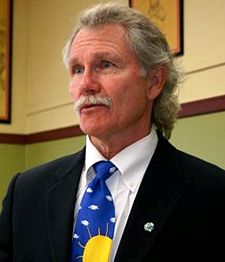
What is clear is that’s one fine piece of mustache.
Posted in Business, Government, Law, Oregon, Politics, Sports, University | Comments Off on Nike, Intel, Oregon & Friends
December 11th, 2012 by C.W. Keating

After getting off of work in the dungeon that is the Knight Library basement, I stepped into the afternoon rain. I pulled a pre-rolled cigarette from my pocket (Bugler brand – mangy, disgusting Bugler) and lit it. Standing off to the side so as not to spread smoke, an elderly woman shot me the evil eye before stopping in front of me: “There’s no smoking on campus. Go smoke across the street.”
I stared at her until she left.
This kind of situation has become all-too-common since the Healthy Campus Initiative, in partnership with the UO Health Center and the administration (with a special guest funding appearance from the ASUO), implemented a campus-wide smoking ban at the beginning of the Fall. The idea of a smoking ban isn’t anything new; the Smoke Free Campus Task Force (SFTF) issued a report in 2008 that sought to
tak[e] up the matter of campus smoking policy with the understanding that the issue is fueled by strong personal convictions for perceived personal rights, both the right to be free from the effects of secondhand smoke and the right to choose to smoke cigarettes (STFT Report, emphasis mine)
The rest of the report either references student support from polls drawn from other universities, or flat-out neglects student responses in order to reference various studies, policies, and polls from other universities. Under “Synthesis of Survey Findings of UO Faculty, Staff, and Students,” the report states that
Many survey respondents are ready to support the move to a smoke free campus… [and] also were confident that this could be accomplished with designated smoking areas… (Ibid.)
Oh, hey, there’s a reasonable point. But no! The STFT simply cannot concede, because “enforcement becomes very difficult and compliance suffers as a result.” You don’t say.
No matter what the administration does, what programs it implements, what funding it pulls or pushes, students will push against it. Lord knows the Commentator will. The Healthy Campus Initiative tried to remedy this student disconnect with the “STFU” posters, a internet-conscious campaign that seemed to confuse people more than encourage quitting (check out this post about the issue from our very own Editor Emeritus Sophia Lawhead).
Another argument is that it unfairly targets lower-income UO workers. Even those filthy hipsters at the OV agree with us on this point. Making workers go off campus for a 15 minute smoke break is not only inconsiderate, but damaging to already-strained labor relationships.
 “All I wanted was a non-fat, cream-jizzed latte with peasant tears in it!” So why bring up this almost-5-year-old report, you may ask? Because Frances Dyke and company never really cared about what students thought. The UO has become a brand, and it needs to sell itself in order to keep flagging state funding and private donor contributions steady. The publicity surrounding the ban has relentlessly focused on the “progressive” aspects of the program without attending to the opinions of students or faculty – and if so, only through narrow data samples used to prop up their point.
But the effects of secondhand smoke are serious. I completely understand the goal behind the smoking ban. Cigarette butt litter continues to be a problem, and has only been exacerbated by the ban — take a look at the 13th and Kincaid entrance to campus if you don’t believe me. Families with young children and people with respiratory problems are also rightfully concerned.
The only way to fight this ban, then, is to implement a personal smoker code of ethics to demonstrate smoker commitment to a healthy campus and personal freedoms. Here’s mine:
- Always smoke away from buildings and large groups of people, and/or areas of great traffic.
- Stop inhaling and pull the cigarette as far away from passing families with children.
- If someone asks you to smoke off campus, politely decline or simply don’t say anything at all. You’ll be finished if and when they call DPS.
- Put butts out and make sure they’re extinguished before throwing them away.
- Throw butts in the trash.
- If an officer asks you to put your cigarette out, assess the situation. Fines suck, but so do the deprivation of “perceived personal rights.”
- Overall, recognize that your activity is looked down upon. Take pride in this.
It’s not perfect, but it works for me. The Commentator will continue to fight this arbitrary ban with articles, letters, appeals, and upcoming events like Tobacco Appreciation Day. But the ball is in smokers’ courts. We at the Commentator will do our best to point out the massive cavalcades of bullshit directed at students who make the choice to smoke. This smoking ban is just another attempt at nannying the student populace; the administration never does anything without direct benefit to them, and they’ve fucked smokers to bolster their public image under the pretense of “knowing what’s best.”
The whole campaign feels like yet another pat on the head, another assumption about our intelligence, actions, and responsibilities. But we’re not kids anymore. We’re adults, students, workers, and yes, smokers. So smoke ’em if ya got ’em. It’s going to be a long, long battle.
Posted in '08 Election, 2010 ASUO Elections, 2011 ASUO Elections, 2012 ASUO Elections, Alumni, ASUO, Campus, Civil Liberties, Civil Rights, Crazy, Drugs, Education, Elections, Ethics, Eugene, Government, Law, Miscellaneous, Narcissism, Oregon, Politics, Smoking Ban, Snark, University, Website | 2 Comments »
November 26th, 2012 by Nick Ekblad

With 4,006 total votes in the last EMU referendum, the decision to renovate won by 1,811 votes.
Outlined in red above is the advice of RBI strategies to the EMU Task Force. It was also included in the public records released a week ago. UO Matters has the scoop. This surly Commentator will belatedly summarize the sickening disregard for public records law. It was only after the elections that the redacted “public” documents were released, here.
The emails of Holmes, Gottfredson and Lariviere are heavily redacted per ORS 192.502 (1, 2, 8, 9). The names of the members of the EMU Task Force are redacted as well as about four page-sized chunk.
What’s more, they illustrate “the opponent” as narrow-minded, yet politically active and engaged with opinions born out of misconception.
The heavy elision of this material must be protested. Surely they can’t be hiding behind FERPA for this?
I aim to find out. In the meantime, file a complaint with the Board of Education. A modest example of a complaint:
The Office of Public Records at the University of Oregon redacted a slew of information from emails sent via a public account regarding public affairs. It is very possible that FERPA was used to justify redacting these documents when they were indeed not educational documents at all.
In the end, I am glad I won’t be here to pay for a shiny new EMU that I won’t be using.
Posted in ASUO, Campus, Education, Government, Lariviere, University | 1 Comment »
November 15th, 2012 by Nick Ekblad
Special Elections are currently open (my apologies for the late post) and the EMU referendum closes this Friday. Students are urged to educate themselves with the propaganda (self-described as unbiased, but is also outdated? WTF…) that has been distributed to the campus community electronically through emails and verbally by “students on 13th Avenue”. There are a lot of nice pictures and compelling arguments for WHY and WHEN the EMU should be renovated, but there has been little discussion about HOW. It makes sense to renovate the EMU (like the unbiased propaganda said), but there is a big rush and neglect of appropriate action in its planning.
The main problem I see with the proposed renovation is that students are expected to start paying for it beginning Fall of 2014, regardless of year in school. The project is EXPECTED to be finished by the start of the 2016 school year. I’d bet anybody who thinks that deadline will be met $20 bucks that it won’t. The “unbiased” information disseminated is ambiguous as to whether or not the EMU will be in service during the renovation (my guess is that, for the most part, no). Granted, the per term fee has been reduced from $100 to $69 per student, a significant reduction. Furthermore, I concede that it really isn’t that much skrilla (really a mere fraction of the formidable amount we already pay in tuition) to sacrifice for a better-functioning building with more study space. It should also be noted that private donations will account for $35 million of the project. However, that leaves $100 million put on students, starting Fall 2014. Those expecting to graduate in spring of 2015 or 2016 will be paying for something that they will not use, while being unable to use the current one that they will probably still be paying for! And who knows when it will be finished.
And the emails regarding RBI Strategies, of which I have requested the digital records, have yet to be made available.
In related news, concerned student Sophie Luthin filed a grievance against ASUO President Laura Hinman Wednesday afternoon. Her grievance cites non-fulfillment and illegal implementation of elections by the ASUO President. Accusing her of failing to appoint Elections Board officials and instead implementing the EMU Referendum herself, Luthin calls for the removal of Hinman from office.
Posted in ASUO, Campus, Elections, EMU, Government | 4 Comments »
November 1st, 2012 by Ben Schorr

Order of questioning has been decided by rock, paper, scissors. Click below for more.
(more…)
Posted in Campus, Civil Rights, Elections, Government, Miscellaneous, National, Oregon, Politics | 1 Comment »
November 1st, 2012 by Tyler Millette
Jill Stein is the Green Party’s presidential candidate. The Green Party is a very liberal party, with an emphasis and equality and equal opportunity for all. There is also a major focus on the environment and sustainable practices. Stein is proposing a “Green New Deal” in an effort to control global warming and the financial crises facing America. The deal encompasses government investing in green technologies, higher taxes on oil and petroleum profits, break-up of large financial institutions and stricter tax oversight of large corporations. It is predicted that Stein will win between 1% and 1.9% of the popular vote.
Gary Johnson is the Libertarian Party’s presidential candidate. He was the Governor of New Mexico for 8 years, and he notably vetoed 750 bills and left the state a nearly $1 billion dollar budget surplus. He proposes to cut government spending by 42%, and eliminating entirely the federal income tax in favor of the “Fair Tax”, a tax on the amount of money one spends. He is also a proponent of legalizing marijuana and drastically decreasing our foreign involvement. Many have called Johnson a “Ron Paul Libertarian.” He has also climbed Mt. Everest!
Rocky Anderson is the Justice Party’s presidential candidate. The Justice party is a very young political party, being created in November of 2011. Rocky Anderson was the Mayor of Salt Lake City from 2000-2008. The Justice Party doesn’t have a lot of information regarding their platform, but they do want to abolish corporate personhood, end the Bush Tax cuts, and they want to work towards campaign finance reform. They are a party with ecological concerns, wanting to ban mountaintop removal mining and they have a firm stance against the expansion of the Keystone pipeline. Anderson also endorses a single-payer healthcare system to help further equality.
Virgil Goode is the presidential candidate for the Constitution Party. He is running on a basic platform of four points: Restrict immigration, cut back the size of the government, balance the budget and impose congressional term limits. Interestingly, he has been criticized more harshly than any other candidate as being a “spoiler”, taking away votes for Romney and helping Obama, though he is only the third most popular Third Party candidate, behind Jill Stein and Gary Johnson. The Constitution Party is a quite conservative party, and as the name suggests, attempts to determine policy based on the documents that founded our country.
Posted in Elections, Government, National, Politics, Sex | 1 Comment »
October 26th, 2012 by Nick Ekblad
Once upon a time, in a land very near and dear, the University of Oregon:
On January 1st, 2011, former Editor-in-Chief CJ Ciaramella emailed a request for ASUO Senators’ email correspondence (i.e., those emails sent to and from [email protected] or [email protected]) to Public Records Officer Liz Denecke. As reading this previous post will inform you, Denecke responded via email to CJ’s request saying that in order to fulfill such a request, it would cost him a whopping $428.36– “about half” being used to cover the costs “producing the documents” and “the other half […] for redaction, and that cost is estimated conservatively and will likely cost more than the estimate.” Denecke’s explanation continues, stating that such emails “will be student records, subject to the protection of student privacy laws. That will require a great deal of redaction and you may end up with documents that do not tell you what you want to know.” Denecke would later tell Ciaramella over the phone that the Family Educational Rights and Privacy Act (FERPA) protects the students in this case, calling for intensive redaction of student names (i.e., the ASUO Senators’ names) and anything unrelated to ASUO business. Hence such expensive estimated compensation for the production of this Public Records Request. Because of this, Ciaramella abandoned the pursuit, deeming it stonewalled.
(more…)
Posted in ASUO, Blowing Stuff Up, Education, Government, Politics | 1 Comment »
|